Norwegian Fjords by Rail
Six days Oslo to Bergen without a car: the Bergensbanen, the Flam line, and the Naeroyfjord by boat.
Rail Journey · 6 days · May to September
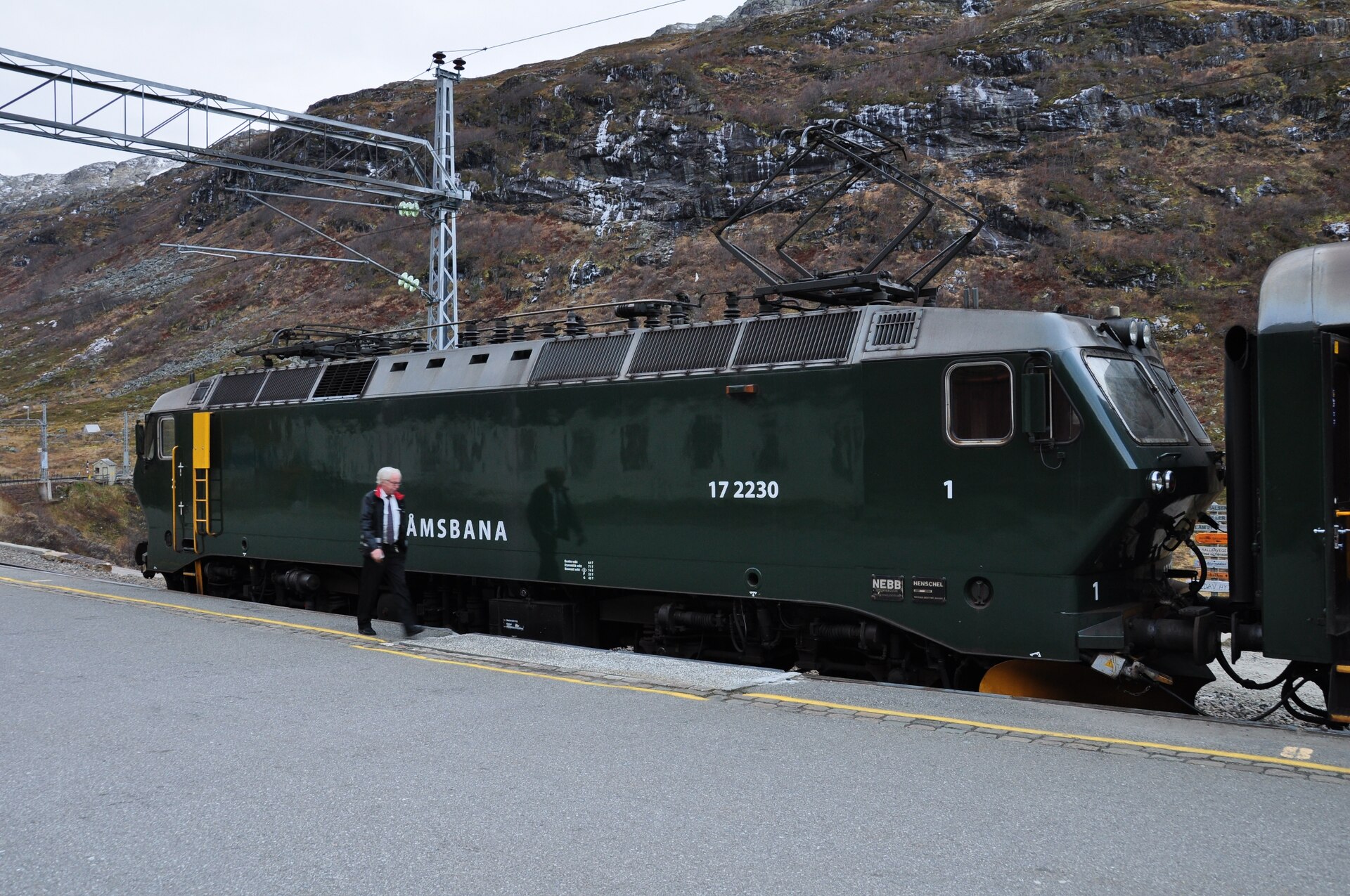
Norway's fjords are usually driven, which means ferries, tunnels and a great deal of time looking at the road. The rail and boat combination covers the same ground better: the Bergen line crosses the Hardangervidda at 1,222 metres, the Flam branch drops 866 metres in twenty kilometres on adhesion alone, and the Naeroyfjord is 250 metres wide with walls a kilometre high and no road along it at all. Two nights in Flam and Balestrand rather than one turns the classic day-trip circuit into an actual week.
Day by day
- Day 1
Oslo
One day in the capital, spent on the two things that are actually unique to it.
10:00Viking Ship Museum collection at the Museum of the Viking Age
The Oseberg and Gokstad ships are the best-preserved Viking vessels anywhere, buried in blue clay in the ninth century and dug out nearly whole.
The Bygdoy museums have been under reconstruction; check what is open before committing the morning, and the Fram Museum next door is a strong substitute.
14:00Vigeland Park
Two hundred sculptures by one man, arranged along a single axis, and the Monolith is 121 figures carved from one block of granite.
Open at all hours and free. Twenty minutes from the centre by tram.
17:30Opera House roof and the harbour
A building designed to be climbed, rising out of the fjord in white marble, with the whole harbour redevelopment around it.
The roof is a public space and you can walk up it from the waterfront.
- Day 2
The Bergen line to Myrdal
Four and a half hours across the roof of Norway, then the branch line down.
08:25Bergensbanen over the Hardangervidda
It crosses Europe's largest mountain plateau above the treeline for well over an hour, and the line took twenty-five years and considerable loss of life to build.
Reserve seats in summer. Finse at 1,222 metres is the highest station in northern Europe and has snow beside the line into July.
14:00The Flam Railway
866 metres of descent in twenty kilometres, on ordinary adhesion rather than a rack, with twenty tunnels and a gradient of one in eighteen.
Sit on the left going down. The Kjosfossen stop is theatrical and brief.
- Day 3
Aurland and Stegastein
Above the fjord rather than on it, on the old road over the mountain.
09:30Stegastein viewpoint
A thirty-metre timber platform cantilevered 650 metres above the Aurlandsfjord, with a glass end and no visible support.
The road up is narrow with passing places; a shuttle bus runs from Flam and Aurland in summer.
14:00Flam valley to Brekkefossen
A waterfall directly above Flam that almost none of the cruise passengers walk to, with the whole valley and the fjord head beneath it.
A steep forty-minute climb from the village, on steps and roots. Slippery when wet, which is often.
- Day 4
The Naeroyfjord
The narrowest arm of the Sognefjord, by boat, which is the only way there is.
09:00Flam to Gudvangen through the Naeroyfjord
250 metres wide at its narrowest with walls up to 1,700 metres, and a World Heritage fjord that no road follows.
The electric ferries are near-silent, which matters more than it sounds. Dress warmer than the temperature suggests; it is cold on deck.
15:30Express boat to Balestrand
Out of the side arm into the main Sognefjord, which is 205 kilometres long and 1,300 metres deep: the longest and deepest in the country.
Timetables are seasonal and sparse; check the day's sailing before planning around it.
- Day 5
Balestrand and the Jostedal ice
A resort village of dragon-style villas, and an arm of the largest glacier in mainland Europe.
09:00Boyabreen and the Jostedalsbreen arm
An outlet of Jostedalsbreen, 474 square kilometres of ice, hanging above a meltwater lake you can drive to.
Never walk onto glacier ice without a guide. The Norwegian Glacier Museum at Fjaerland is on the same road.
16:00Balestrand and St Olaf's Church
The dragon-style villas along this shore were built for a Victorian tourist trade that arrived by steamer, and the village has kept almost all of them.
A small wooden Anglican church built in 1897 for the English visitors who came here to fish.
- Day 6
Down to Bergen
The last boat and bus leg, and an afternoon on the Hanseatic wharf.
14:00Bryggen
The German merchants' wharf, burnt and rebuilt on the same medieval foundations for six centuries, and still leaning at every angle.
The Hanseatic Museum and the alleys behind the front row are the interesting part; the front is mostly shops.
17:00Floibanen funicular
The whole city, its seven mountains and the harbour in one view, and the descent on foot passes through the old timber quarters.
Six minutes to 320 metres, from the middle of the city. Walking down through the wooden houses takes about forty-five minutes.
Questions
- How long is the Norwegian Fjords by Rail itinerary?
- The Norwegian Fjords by Rail itinerary runs 6 days and covers 13 stops across Oslo, Flam, Balestrand, Bergen.
- When is the best time to do the Norwegian Fjords by Rail itinerary?
- May to September is the best window for the Norwegian Fjords by Rail itinerary.
- What happens on day one of the Norwegian Fjords by Rail itinerary?
- Day one is oslo: One day in the capital, spent on the two things that are actually unique to it.
Sources
Save this itinerary to CarryOn and it becomes a real trip — every stop on your timeline, with entry requirements checked against your passport and the whole thing editable.
Save this as a tripCurated by CarryOn