Oaxaca and the Sierra Norte
Six days of markets, mezcal and mole in the valley, then up into the cloud forest villages above it.
Food & Wine · 6 days · Mar, Apr, Oct, Nov
Oaxaca is the best eating city in Mexico and it is entirely possible to spend a week there without leaving a four-block radius, which is a waste of the valley it sits in. This puts three days in the city - the markets, Monte Alban, one mezcal day in the Tlacolula valley - and then goes up to 3,000 metres into the Pueblos Mancomunados, eight Zapotec villages that run their own tourism cooperatively. The contrast is the point: 30 degrees and street food at lunch, pine forest and a wood stove that night.
Day by day
- Day 1
The centre on foot
Arrive at altitude, walk slowly, and eat in a market rather than a restaurant on the first night.
15:00Templo de Santo Domingo de Guzman
A hundred years of Dominican gold leaf over every surface of the nave, and the Rosary chapel is more extravagant again.
Closed to visitors during services. The gilded interior is best in the late afternoon when the west light reaches it.
16:45Museo de las Culturas de Oaxaca
The gold from Tomb 7 at Monte Alban, in the convent it was brought to; the finest Mixtec metalwork that survives anywhere.
Closed Mondays. The ethnobotanical garden next door is by guided tour only and needs separate booking.
19:30Mercado 20 de Noviembre
The best introduction to how this state eats, and cheaper and better than almost any restaurant you could book instead.
The smoke-filled corridor of grills is the Pasillo de Humo; you buy meat by weight from one stall and vegetables and tortillas from another.
- Day 2
Monte Alban
The Zapotec capital on a levelled mountain top, early, before the sun is directly overhead.
08:00Monte Alban
They flattened an entire mountain to build it around 500 BC, and the main plaza is still 300 metres of level ground 400 metres above the valley floor.
Almost no shade on the plaza. The Danzantes gallery and Building J are the two things not to miss.
13:30Comedor at the Mercado de Abastos
The wholesale market that supplies the whole valley, and where the tlayudas are made by people who have made nothing else.
Enormous, chaotic and Saturday is the big day. Go with small notes and leave the valuables at the hotel.
18:30Andador Macedonio Alcala at dusk
The pedestrian spine of the centre, and the hour when the whole city is out on it.
Wedding processions with brass bands and giant puppets come down this street most weekend evenings.
- Day 3
The Tlacolula valley
Sunday market, a 2,000-year-old tree, mezcal at source, and mineral terraces.
09:00Tule tree at Santa Maria del Tule
A Montezuma cypress with the stoutest trunk of any tree on earth, more than fourteen metres across, and around two thousand years old.
Fifteen minutes out of the city on the road east. Small entry fee to the churchyard.
10:30Mitla
The stone mosaics here are cut and fitted without mortar into fourteen different geometric patterns, and there is nothing like them anywhere else in Mesoamerica.
The Spanish built a church directly on top of one of the groups, which is itself worth seeing.
13:00A palenque at Santiago Matatlan
The self-declared world capital of mezcal, where you can watch agave roasted in a stone pit, crushed by a horse-drawn tahona, and distilled in copper on the same site.
Do not drive after this. Hire a driver for the day or take a tour; every producer will pour.
16:30Hierve el Agua
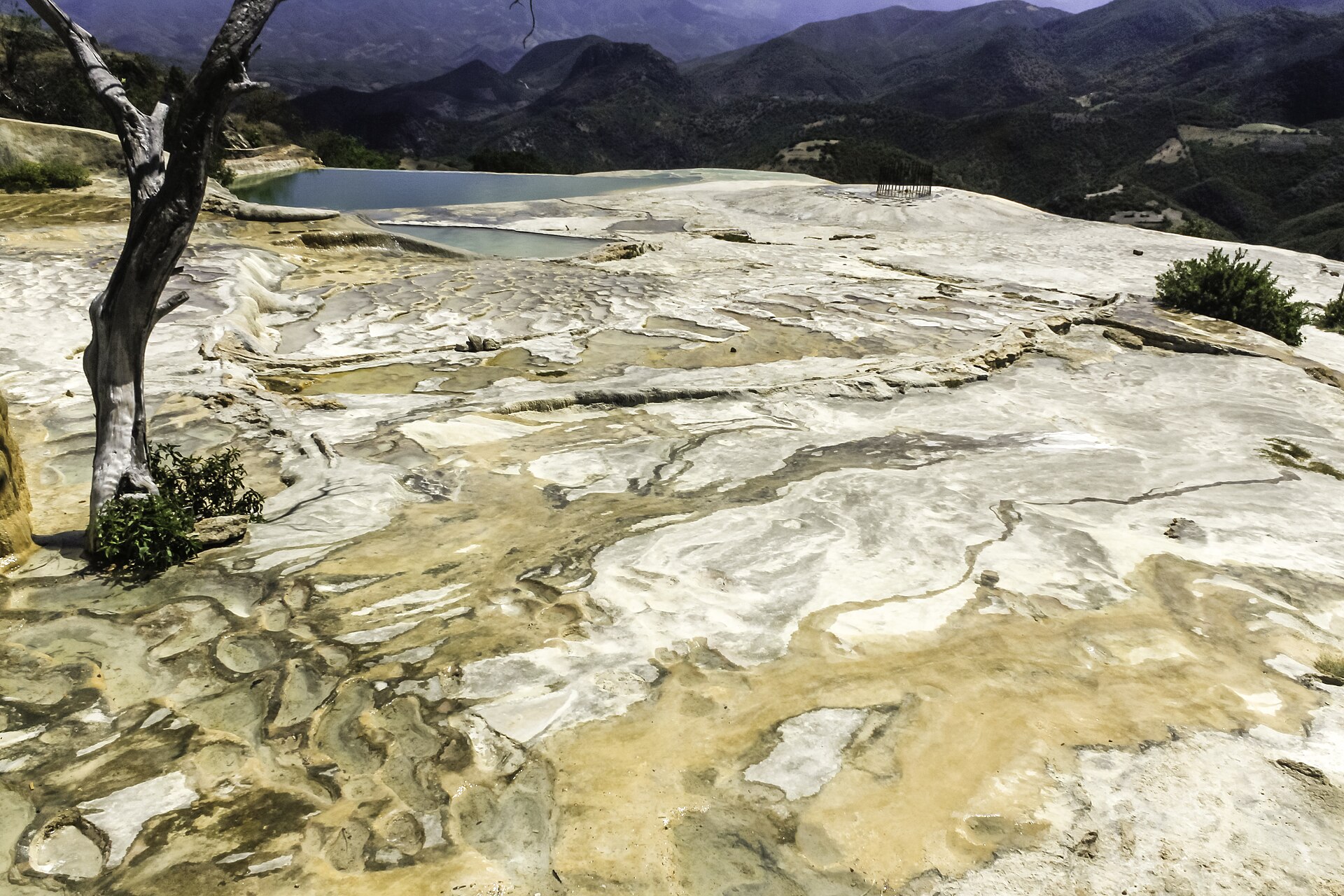
Mineral springs that have deposited calcium carbonate over a cliff edge for thousands of years, so it reads as a frozen waterfall fifty metres high.
The access road is rough and the site has been closed by local disputes more than once; check before committing the afternoon.
- Day 4
Up into the Sierra Norte
Two hours and 1,500 metres of climb into pine and oak cloud forest.
09:30Teotitlan del Valle
A weaving village where the looms are Spanish, the designs are Zapotec, and the red still comes from insects farmed on cactus.
The workshops that demonstrate natural dyeing with cochineal and indigo are the ones worth an hour.
14:00Cuajimoloyas
One of the eight Pueblos Mancomunados, which have shared their forest in common since the colonial period and now run the trails, guides and cabins as a cooperative.
3,200 metres. It gets to near freezing at night in winter and the cabins are heated by wood only.
- Day 5
Village to village on foot
The traverse between two of the eight villages, on trails the communities maintain themselves.
08:30Cuajimoloyas to Benito Juarez
Cloud forest with bromeliads on every branch, and the trail drops through four distinct forest types in a morning.
About twelve kilometres, mostly downhill, at altitude. A community guide is required and is arranged through the village office.
16:00Mirador at Benito Juarez
On a clear afternoon you can see Pico de Orizaba, 200 kilometres away and the highest mountain in Mexico.
There is a zip line across the valley here, run by the same cooperative.
- Day 6
Back down to the valley
Two hours down, one last market, and a proper lunch before the flight.
11:00Mercado Benito Juarez
The city's oldest covered market, and the one where the produce and the spices are rather than the grills.
Chapulines, mole pastes and chocolate by weight are the things that actually travel home.
13:30Lunch in Jalatlaco
The neighbourhood the city's own cooks eat in, and the last chance at a mole negro made by someone who grinds it daily.
Cobbled, painted and ten minutes east of the centre. Sunday is when the barrio is at its best.
Questions
- How long is the Oaxaca and the Sierra Norte itinerary?
- The Oaxaca and the Sierra Norte itinerary runs 6 days and covers 16 stops across Oaxaca de Juarez, Santiago Matatlan, Cuajimoloyas, Benito Juarez.
- When is the best time to do the Oaxaca and the Sierra Norte itinerary?
- Mar, Apr, Oct, Nov is the best window for the Oaxaca and the Sierra Norte itinerary.
- What happens on day one of the Oaxaca and the Sierra Norte itinerary?
- Day one is the centre on foot: Arrive at altitude, walk slowly, and eat in a market rather than a restaurant on the first night.
Sources
Save this itinerary to CarryOn and it becomes a real trip — every stop on your timeline, with entry requirements checked against your passport and the whole thing editable.
Save this as a tripCurated by CarryOn