Okavango Delta and Chobe
Water first, then dust: the Okavango and Chobe in the order the dry season rewards.
Safari · 7 days · July to October
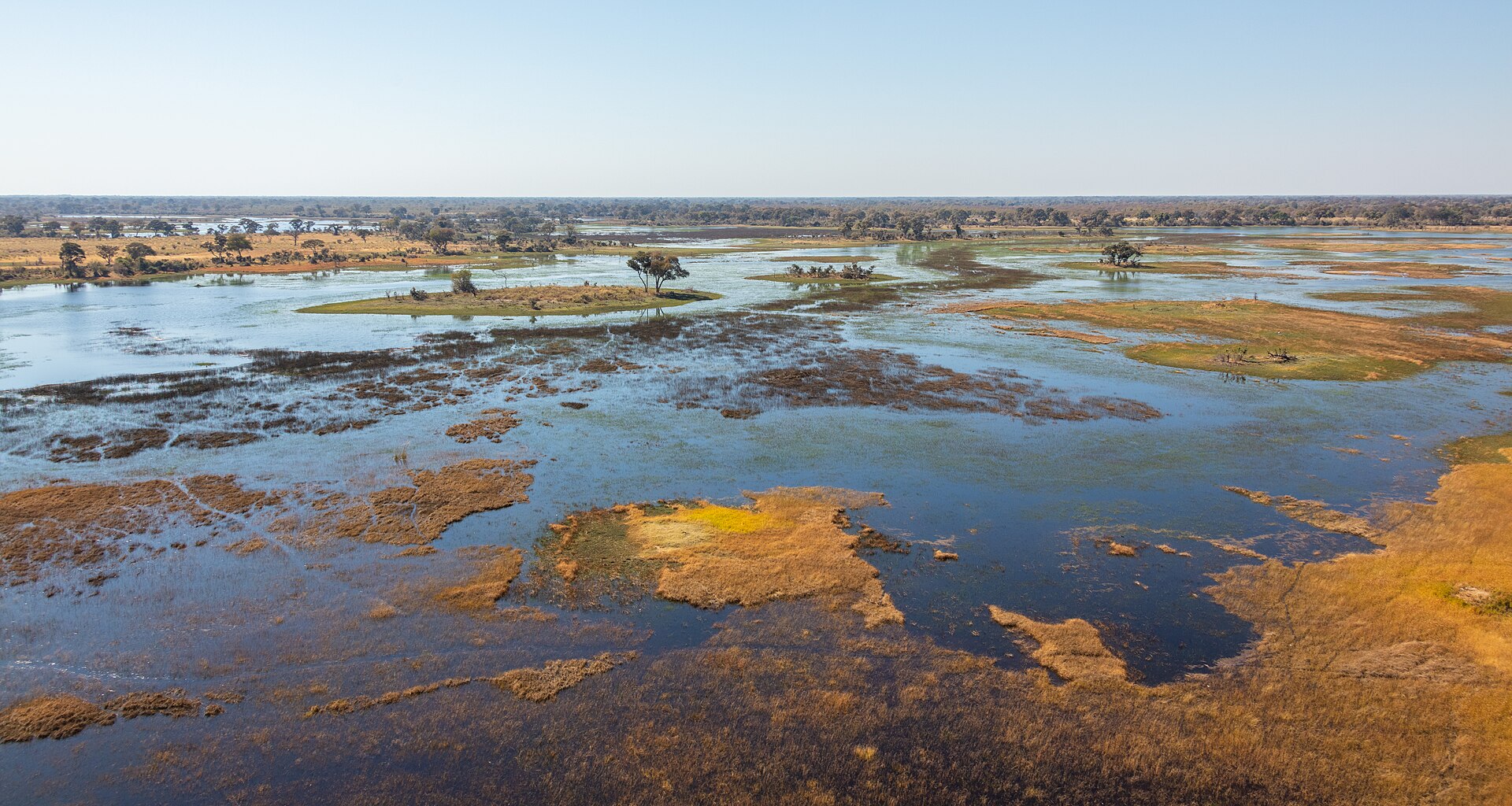
Fly in west and drive out east. Water first, while the flood is still high around Chief's Island, then the Khwai river line, Savute and finally the Chobe riverfront, so the game gets denser as the week goes on rather than peaking on day two. The reason Khwai earns two nights is legal rather than scenic: it is a community concession outside Moremi, where night drives and walking on foot are allowed and the reserve's rules stop at the river. End at Kasane and fly out from there instead of doubling back to Maun.
Day by day
- Day 1
Into the delta
A light aircraft from Maun and straight onto Chief's Island for the last of the afternoon.
16:00Chief's Island
The afternoon drive from the airstrip is the one that tells you what the water has done this year, and the lion here are habituated enough to be found in daylight.
Light-aircraft transfers into the delta cap soft luggage at around 20 kg per person — a hard suitcase will not go in the hold.
- Day 2
A water day and a land day
Poled channels at dawn while it is cool, big game in the reserve at last light.
06:30Mokoro on the Okavango channels
Sitting at water level in a poled dugout is the only way to see the delta as reed frogs and sitatunga do, and the silence is the point.
The flood peaks between June and August — months after the rain that causes it falls in the Angolan highlands, which is why the delta is at its fullest in the dry season.
15:30Moremi Game Reserve
Moremi was the first reserve in Africa proclaimed by a community rather than a colonial government, and its mopane and floodplain mix holds wild dog as reliably as anywhere on the continent.
No off-road driving and no night drives inside the reserve; both are permitted in the concessions that surround it.
- Day 3
Predators at dawn, then east to Khwai
A last island morning, an afternoon transfer, and the first legal night drive of the trip.
06:00Chief's Island at first light
Cats hunt in the last of the dark and lie up by nine — this drive is the reason you paid to sleep on the island.
17:30Khwai after dark
Khwai is one of the few places in northern Botswana where you may be out after sunset, and genet, civet, honey badger and leopard only exist after it.
A red filter goes over the spotlight for anything with reflective eyes; a guide who lights up a hunting leopard with white light is doing it wrong.
- Day 4
The Khwai river line
The reserve boundary at dawn, and a walk on foot in the afternoon.
06:00Moremi North Gate
By September the Khwai is the only permanent water for miles and everything walks to it — elephant herds cross the river in front of the gate all morning.
16:00Walking safari along the Khwai
Two hours on foot recalibrates everything: tracks, dung, alarm calls and the actual size of a buffalo when you are not sitting in a vehicle.
Armed lead guide and a back-up, single file, no bright colours — and no walking inside the reserve, only on the concession.
- Day 5
Savute
A short hop north into the dry country, and a full day on the marsh.
06:00Savute Marsh
Savute's lions learned to hunt adult elephant at the pumped waterholes in the dry season, behaviour recorded almost nowhere else, and the rock paintings on Gubatsa Hill predate all of it.
The Savute Channel dried up in 1982 and did not reach the marsh again until 2010 — ask your camp what it is doing this season before you commit nights here.
- Day 6
The Chobe riverfront
Elephant on the floodplain at dawn, and the river itself in the evening.
06:00Chobe Riverfront
The highest elephant density on the continent walks down to this water every dry-season morning, and the Puku here are the only population in Botswana.
Gate queues from Kasane build sharply after 06:30 with the day visitors — being inside the park already is worth an hour.
15:30Chobe River at sunset
From the water you sit below the animals rather than above them, and the light on the Namibian floodplain opposite is the reason the boats go out at four.
Choose a small tender over one of the double-decker party boats; the difference in how close you get to a drinking herd is total.
- Day 7
Last light on the water
One more hour on the river before the border-post airstrip.
06:00Chobe River at dawn
The morning boat is a different trip from the evening one — skimmers working the sandbars, hippo still out of the water, and no other craft on the river.
Questions
- How long is the Okavango Delta and Chobe itinerary?
- The Okavango Delta and Chobe itinerary runs 7 days and covers 11 stops across Maun, Khwai, Kasane.
- When is the best time to do the Okavango Delta and Chobe itinerary?
- July to October is the best window for the Okavango Delta and Chobe itinerary.
- What happens on day one of the Okavango Delta and Chobe itinerary?
- Day one is into the delta: A light aircraft from Maun and straight onto Chief's Island for the last of the afternoon.
Sources
Save this itinerary to CarryOn and it becomes a real trip — every stop on your timeline, with entry requirements checked against your passport and the whole thing editable.
Save this as a tripCurated by CarryOn