Provence and the Luberon
Six days between Avignon and the hill villages, timed for the lavender and the Roman stone.
Food & Wine · 6 days · May, Jun, Jul, Sep
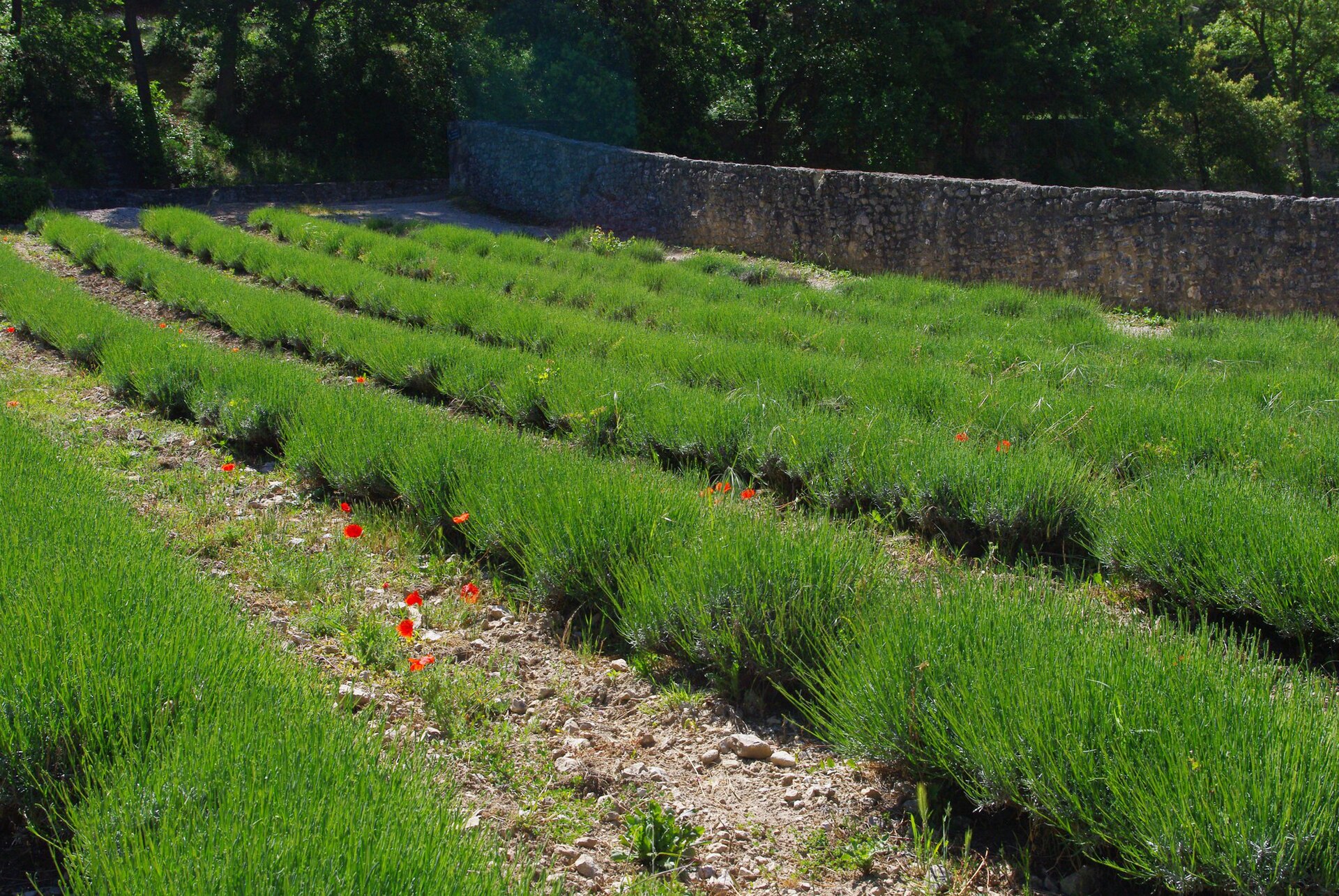
Provence rewards a small radius. Everything here sits inside an hour of Avignon, so the week is built on half-days rather than drives: the Pont du Gard and the Palais des Papes for the Roman and papal stone, then the Luberon villages, then Roussillon's ochre and the Sault plateau. Lavender is the one thing that genuinely dictates timing - Valensole flowers from late June and is cut in the second half of July, Sault runs two to three weeks later because it is higher. Come in August and you get stubble.
Day by day
- Day 1
Avignon
The largest Gothic palace in Europe, and a bridge that stops in the middle of the river.
14:00Palais des Papes
Seven popes ruled from here between 1309 and 1377, and the building is 15,000 square metres of fortress pretending to be a palace.
The rooms are mostly bare; the augmented-reality tablet is one of the few that genuinely helps.
17:00Pont Saint-Benezet and the Rocher des Doms
Four arches of a twenty-two arch bridge, repeatedly rebuilt and finally abandoned to the Rhone in the seventeenth century.
The gardens on the Rocher are free and give the best view of the bridge from above.
- Day 2
Roman stone
West across the Rhone for the aqueduct, then south for the arena.
09:00Pont du Gard
Forty-nine metres high, built without mortar in the first century, and the aqueduct it carried fell only 12 metres over 50 kilometres.
You can swim in the Gardon below it in summer. The museum on the left bank is genuinely good.
14:00Arles amphitheatre and the Alyscamps
A first-century arena that held 20,000 and was later filled with houses and two churches, all of which were cleared out again in the 1830s.
A combined ticket covers the arena, the theatre and the Alyscamps. Van Gogh painted around 200 canvases in this town in fifteen months.
- Day 3
Into the Luberon
East to the hill villages, arriving in time for the light that makes them.
09:30L'Isle-sur-la-Sorgue
Built on islands in the Sorgue with moss-covered waterwheels still turning in the channels, and the largest antiques trade in France outside Paris.
Sunday is the big market and the town is impossible to park in; go early or go on a Thursday.
13:00Fontaine de Vaucluse
The largest spring in France and the fifth largest in the world, coming out of the base of a 230-metre cliff, and nobody has yet found the bottom of it.
In late summer the pool can be almost dry; in spring it is spectacular. Twenty minutes' walk up from the village.
18:30Gordes at dusk
Dry stone houses stacked up a rock face under a castle, and the whole village is the same colour as the hill it stands on.
The classic view is from the D15 pull-out on the approach from Cavaillon.
- Day 4
Ochre and abbey
The Senanque valley in the morning, and the red cliffs of Roussillon after lunch.
08:30Abbaye Notre-Dame de Senanque
Founded in 1148 and still occupied, with rows of lavender running up to the apse: the most reproduced image in Provence, and it is genuinely better in person early.
A working Cistercian monastery; interior access is by booked guided tour only and numbers are small. The lavender in front is cut in mid-July.
11:30Roussillon and the Sentier des Ocres
Seventeen distinct shades of ochre in the old quarry cliffs, which were worked commercially until the 1930s and gave the whole village its colour.
The ochre dust stains light-coloured shoes and clothing permanently. Two marked loops, thirty and fifty minutes.
16:30Menerbes and Lacoste
Menerbes is the village Peter Mayle made famous and Lacoste is the Marquis de Sade's ruined castle, now owned by a fashion designer and partly restored.
Both villages are steep and cobbled with parking at the bottom.
- Day 5
The lavender plateau
Up onto the Sault plateau, which flowers later and is emptier than Valensole.
08:30Sault plateau
True fine lavender rather than the lavandin hybrid grown lower down, in fields that run to the foot of Mont Ventoux.
At 800 metres it flowers two to three weeks after Valensole, usually mid-July to mid-August. Never walk into a field without asking; these are crops.
13:00Gorges de la Nesque
A limestone canyon 400 metres deep with the road cut into one wall, and the Rocher du Cire hanging above it.
Narrow, with tunnels and no barrier in places. There is one belvedere with room to stop.
19:30Village dinner in Bonnieux
The terraces here look straight across the valley at Lacoste and the Vaucluse plateau, and the sunset arrives over the whole Luberon.
Most kitchens in these villages take last orders around nine.
- Day 6
The Rhone vineyards
West again for the one wine appellation worth building a morning around.
10:00Chateauneuf-du-Pape
The first appellation controlee in France, on a plateau of galets roules - fist-sized stones that hold the day's heat into the night.
Thirteen permitted grape varieties. Book tastings in advance; most domaines are not walk-in.
14:30Orange Roman theatre
The only Roman theatre in the western world with its stage wall still standing, 103 metres long and 37 high, and it is still used for opera every summer.
Thirty minutes from Avignon and close to the A7 for the run to the airport.
Questions
- How long is the Provence and the Luberon itinerary?
- The Provence and the Luberon itinerary runs 6 days and covers 15 stops across Avignon, Gordes, Roussillon, Sault.
- When is the best time to do the Provence and the Luberon itinerary?
- May, Jun, Jul, Sep is the best window for the Provence and the Luberon itinerary.
- What happens on day one of the Provence and the Luberon itinerary?
- Day one is avignon: The largest Gothic palace in Europe, and a bridge that stops in the middle of the river.
Sources
Save this itinerary to CarryOn and it becomes a real trip — every stop on your timeline, with entry requirements checked against your passport and the whole thing editable.
Save this as a tripCurated by CarryOn